

Projects
/
12/2/2025
A dome in dialogue with history: The restoration of Comiso’s Mother Church
Aa delicate restoration has breathed new life into the neo-gothic dome of Comiso’s mother church
The restoration of the neo-Gothic dome of Comiso’s Mother Church, a historic landmark that had suffered water seepage, micro-cracks and ineffective past repairs. Guided by principles of compatibility with the original building materials and long-term durability, Mapei experts collaborated with the local Heritage Office to design an integrated conservation strategy.
One of the architectural jewels of the Sicilian town of Comiso is the Mother Church of Santa Maria delle Stelle (Holy Mary of the Stars), built between the late 14th and early 15th centuries. After suffering extensive damage in the disastrous earthquake of 1693, the church was rapidly rebuilt. Among the surviving elements of the original construction are the pillars and the pointed arch of the central nave. The interior of the church is a veritable treasure chest of Baroque art, filled with sculptures, stuccoes and paintings, but its most striking feature is the vast painted wooden ceiling covering 340 m2 of the central nave, with five oil paintings set within large Baroque frames.
The dome, completed in 1894 with clear neo-Gothic references, rests on four large arches and is connected to the supporting structures below by pendentives, creating a complex and fascinating architectural profile. Over the years, the structure has shown signs of deterioration, including water seepage and micro-cracks caused by thermal stress, wind and subsidence. Previous attempts at restoration had proved only partially effective, making a radical and definitive solution necessary.
Compatibility of materials and durability
The new project to restore and conserve the masonry dome, promoted by the Ragusa Heritage Office, was based on two guiding principles: the elastic-mechanical and chemical-physical compatibility between the new materials and the historic surfaces and the long-term durability of the system. In view of these objectives, Mapei’s Technical Services experts were involved in the project from the earliest design stages. Collaboration between the Heritage Office technicians and Mapei Technical Services led to the development of a solution that combined durability, compatibility, elasticity and resistance to weathering, preventing the formation of new micro-cracks while preserving the historic materials.

Antipluviol W, a colourless silane- and siloxane-based water repellent coating, was used on several decorative stone elements of Comiso's Mother Church.
A project focused on protection
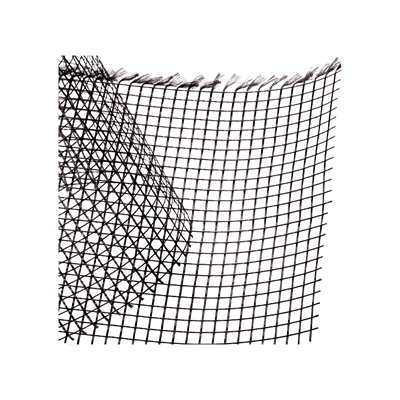
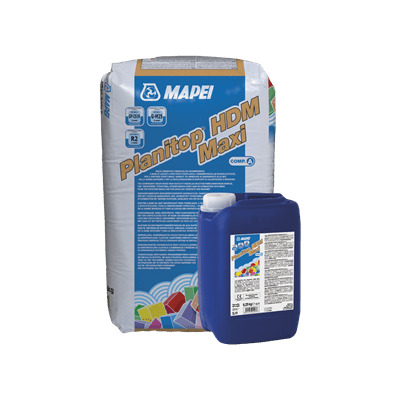
Restoration of the dome’s external surface began with careful cleaning of the substrates using Silancolor Cleaner Plus, a water-based product used to treat surfaces damaged by algae and mould. Consolidation was then carried out with Primer 3296, an acrylic primer in water dispersion, diluted in a 1:1 ratio with water. This was followed by application of a reinforced skim coat consisting of Planitop HDM Maxi mortar and Mapegrid G 120 glass fibre mesh.
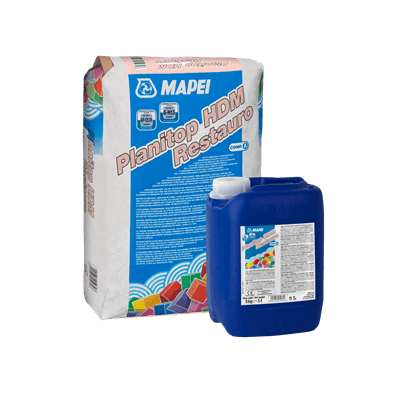
The next stage involved repairing small cavities and irregularities on the surface, filling gaps and smoothing and levelling the old render. This was done with Planitop HDM Restauro, a two-component, pre-blended, fibre-reinforced, high-ductility hydraulic lime (NHL) and Eco-Pozzolan based light-coloured mortar.

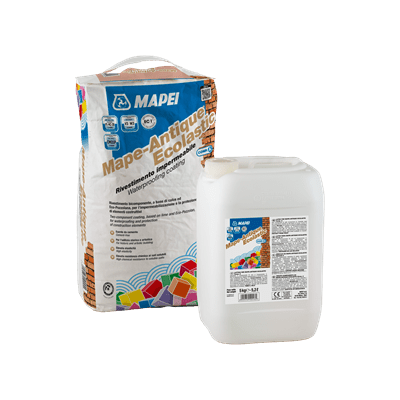
The dome surfaces were waterproofed using Mape-Antique Ecolastic elastic coating, applied in two layers with a thickness of approximately 2 mm.
After devoting careful attention to the details and the junctions between the plaster and stone elements, the surface was waterproofed with Mape-Antique Ecolastic elastic coating, applied in two layers of approximately 2 mm thickness. This salt-resistant, cement-free, lime and Eco-Pozzolan based coating is suitable for waterproofing and protecting construction elements, including those of historical and artistic value such as domes. The combined use of lime and Eco-Pozzolan ensures very similar physical and mechanical characteristics to those of the traditional masonry and plaster mortars used in the past. At the same time, it provides high chemical and physical resistance to aggressive agents in the environment and within the masonry itself, such as soluble salts and moisture. The product features excellent workability, impermeability and elasticity. These properties, together with resistance to the degrading effects of UV radiation, guarantee the durability of structures treated with Mape-Antique Ecolastic.
On decorative stone elements that could not be treated with this system, Antipluviol W was used instead. This colourless, silane- and siloxane-based water repellent impregnator protects materials effectively without altering their appearance. Finally, following tests and site inspections carried out in close cooperation with the Architectural Heritage Section of the Heritage Office, the most suitable colour for the dome was chosen to harmonise with the local context.
This respectful intervention, integrated perfectly with the historic building, shows how the synergy between historical, technical and scientific expertise can achieve outstanding results in the field of conservative restoration.
Project information
Dome of the Mother Church of Santa Maria delle Stelle, Comiso (Ragusa)
Period of construction: 14th - 15th centuries
Period of the intervention: 2018-2019
Owner: Superintendence for Cultural and Environmental Heritage of Ragusa
Superintendent: Calogero Rizzuto
Design: Domenico Buzzone
Works director: Carlo Giunta
Contractor: Scifo Giorgio
Mapei coordinators: Rocco Briglia, Ezio Vallone, Gianluca Iacono, Davide Bandera, Daniele Sala, Salvatore Costa, Mapei SpA
Product Lines


The expert's opinion
5/18/2022
Knowledge and awareness: the foundations of restoration work
Projects
2/14/2024
Notre Dame: an extraordinary work of restoration