The structural restoration of Dubrovnik’s Cathedral of the Assumption, a UNESCO World Heritage landmark whose Baroque dome had suffered severe damage from water iseepage and ageing. Following detailed inspections, Mapei specialists identified the causes of damage and proposed targeted strengthening solutions. The intervention included the application of advanced carbon-fibre solutions from the MapeWrap C UNI-AX system to reinforce the dome.
The Cathedral of the Assumption of the Blessed Virgin Mary is one of the most important historical monuments in Dubrovnik’s old town, a UNESCO World Heritage Site since 1979. Built on the site of a 7th-century basilica, legend has it that the original structure was erected thanks to a donation made by Richard the Lionheart, who on his return from the Third Crusade escaped shipwreck on the nearby island of Lokrum. Destroyed by an earthquake in 1667, it was rebuilt in 1713 in the Baroque style based on a design by the Italian architect Andrea Buffalini. The most striking feature of the structure is without question the dome, which offers a panoramic view of the city walls.
Deterioration caused by the passage of time, water seepage and the weakening of the lead joints made it necessary to completely restore the dome, including structural strengthening work. The central section of the structure, built from tuff blocks and lime-based mortar, was anchored around its perimeter to solid stone walls. The upper section originally featured larch wood rings inserted into special grooves cut into the tuff and secured with stainless steel profiles. These elements and the lead flashing, which acted as a waterproof barrier, were so badly damaged that they needed to be completely replaced and the structure strengthened.

The Cathedral of the Assumption of the Blessed Virgin Mary is one of the most important historical monuments in Dubrovnik’s old town.
The owner, architect and contractor contacted Mapei Technical Services for advice on the most suitable materials and application methods. During preliminary site inspections, Mapei experts carried out a thorough assessment of the dome’s condition and identified the main causes of deterioration. Based on these analyses, they proposed specific technical solutions and suggested products and methods that would guarantee the long-term stability and durability of the loadbearing structure.

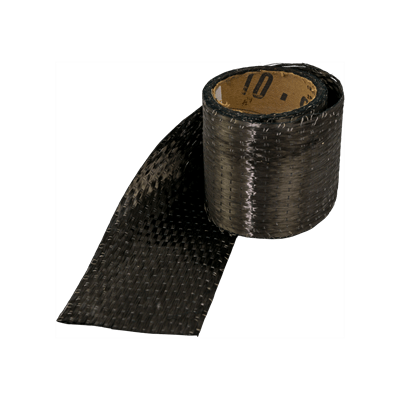
Structural strengthening was carried out using MapeWrap C UNI-AX 600/10, a unidirectional carbon fibre fabric with a high modulus of elasticity and mechanical tensile strength.
Preserving history with high-performance strengthening systems
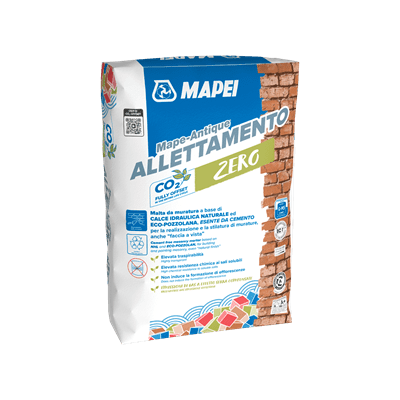
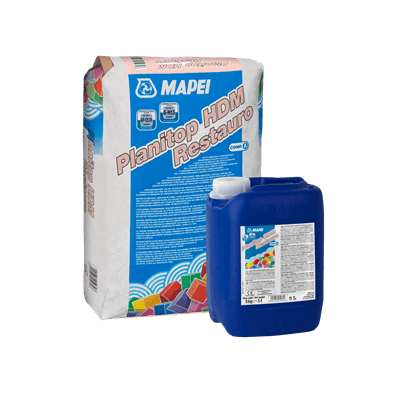
The first step was to remove the lead roofing and wooden beams that had suffered moisture damage, followed by thorough mechanical cleaning of the grooves cut into the tuff. Primer 3296 adhesion promoter was applied, then the mortar joints were reconstructed using Mape-Antique Allettamento salt-resistant masonry mortar. Planitop HDM Restauro, a two-component pre-blended high-ductility mortar, was then applied to further reinforce the joints of the dome.
The structural strengthening work was carried out using solutions from the MapeWrap System designed specifically for the static strengthening of damaged structures. The specific system used was MapeWrap C UNI-AX System, a structural strengthening system consisting of high-strength unidirectional carbon fibre fabric (MapeWrap C UNI AX 600/10) with high modulus of elasticity and epoxy resins to impregnate and bond the fabric.
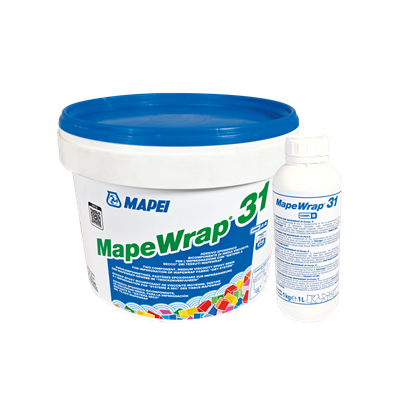
After priming the substrate with MapeWrap Primer 1, MapeWrap 11 epoxy grout was applied onto the surface. Mapewrap 31, a low-viscosity epoxy adhesive was then used to bond the MapeWrap C UNI AX 600/10 fabric.
For the positioning of the new larch beams, stainless steel bolts were installed through the layers of FRP fabric and secured with Mapefix VE SF adhesive to ensure precise and durable anchoring. The new lead flashing was secured with stainless steel screws to prevent galvanic corrosion.
The work significantly improved the ductility, mechanical performance and seismic resistance of the dome, particularly under lateral loads and complex stresses.

The joints in the tuff walls of the dome were filled with Planitop HDM Restauro mortar.
Cathedral of the Assumption of the Blessed Virgin Mary, Dubrovnik (Croatia)
Period of construction: 1671-1713
Period of the intervention: 2022-2023
Owner: City of Dubrovnik; Society of Friends of Dubrovnik Antiquities
Design: Faculty of Civil Engineering, Architecture and Geodesy, University of Split
Site manager: Department of Conservation, Ministry of Culture, Dubrovnik
Contractor for strengthening works: Dom Izgradnja d.o.o.
Mapei distributor: AB Keramika
Mapei coordinators: Marco Pagliani, Mapei SpA; Majda Lukić Štampalija, and Antonijo Jukić, Mapei Croatia