Chipped steps that catch your foot. A patch of concrete that flakes a little more every time that it rains. Damaged concrete can make any surface look neglected – and worse, it often gets weaker over time. Many people assume that the only way to fix damaged concrete is to tear out and replace the entire section, but that is not always necessary. Concrete-repair mortars offer a faster, more cost-effective solution. These specially formulated materials are designed to bond securely to existing concrete, fill gaps and restore strength, giving worn or damaged areas a new lease on life.
At first glance, concrete-repair mortars might look like ordinary concrete mixes – but the similarities end there. Regular concrete is designed for large-scale pouring and shaping; it is great for building something new, but not ideal for bonding to old, worn surfaces.
Repair mortars, on the other hand, are engineered for adhesion and longevity. They typically contain finer aggregates, special bonding agents and additives that reduce shrinkage and improve flexibility. As a result, repair mortars can grip onto existing concrete and resist future damage from weather, freeze-thaw cycles and heavy use.
Concrete repair is not a one-size-fits-all situation. The orientation of the surface and the repair method play a big role in choosing the right mortar. Here is how they break down:
Vertical-repair mortars
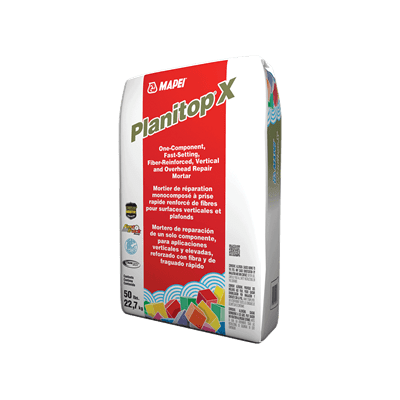
Vertical-repair mortars are designed for repairing upright surfaces such as walls, columns and the sides of beams. These mortars have a thicker consistency and enhanced adhesion, preventing them from slumping or sliding during application. For an example of a vertical-repair mortar, view MAPEI’s Planitop X Technical Data Sheet (TDS).
Overhead-repair mortars
Formulated for use on ceilings or the undersides of concrete structures, overhead-repair mortars have excellent sag resistance, which allows them to be applied in thicker layers overhead without falling. For an example of an overhead-repair mortar, view MAPEI’s Planitop XS TDS.
Form-and-pour repair mortars
Form-and-pour repair mortars are ideal for deep or large-volume repairs where a form can be built around the damaged area. The mortar is poured into the form and allowed to cure, making it suitable for structural repairs and restoring full cross-sections of concrete elements. For an example of a form-and-pour repair mortar, view MAPEI’s Planitop 15 TDS.
Horizontal-repair mortars
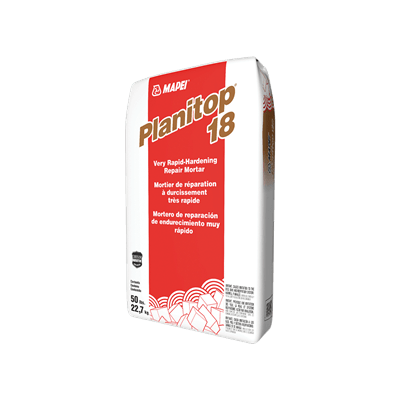
Horizontal-repair mortars are made for flat surfaces such as floors, decks, pavements and slabs. These mortars are often flowable for easy placement and leveling, and they can be formulated for high wear resistance in heavy-traffic areas. For an example of a horizontal-repair mortar, view MAPEI’s Planitop 18 TDS.
Even with the right product, poor technique can lead to failed repairs. Avoid these common pitfalls:
Bottom line: Concrete-repair mortars are a versatile, durable and cost-effective way to restore damaged concrete without the expense and hassle of full replacement. By choosing the right type for your project and applying it correctly, you can extend the life of your concrete surfaces and keep them looking – and performing – like new.
 Keep in touch
Subscribe to our newsletter to get Mapei news









Comments
Load more comments